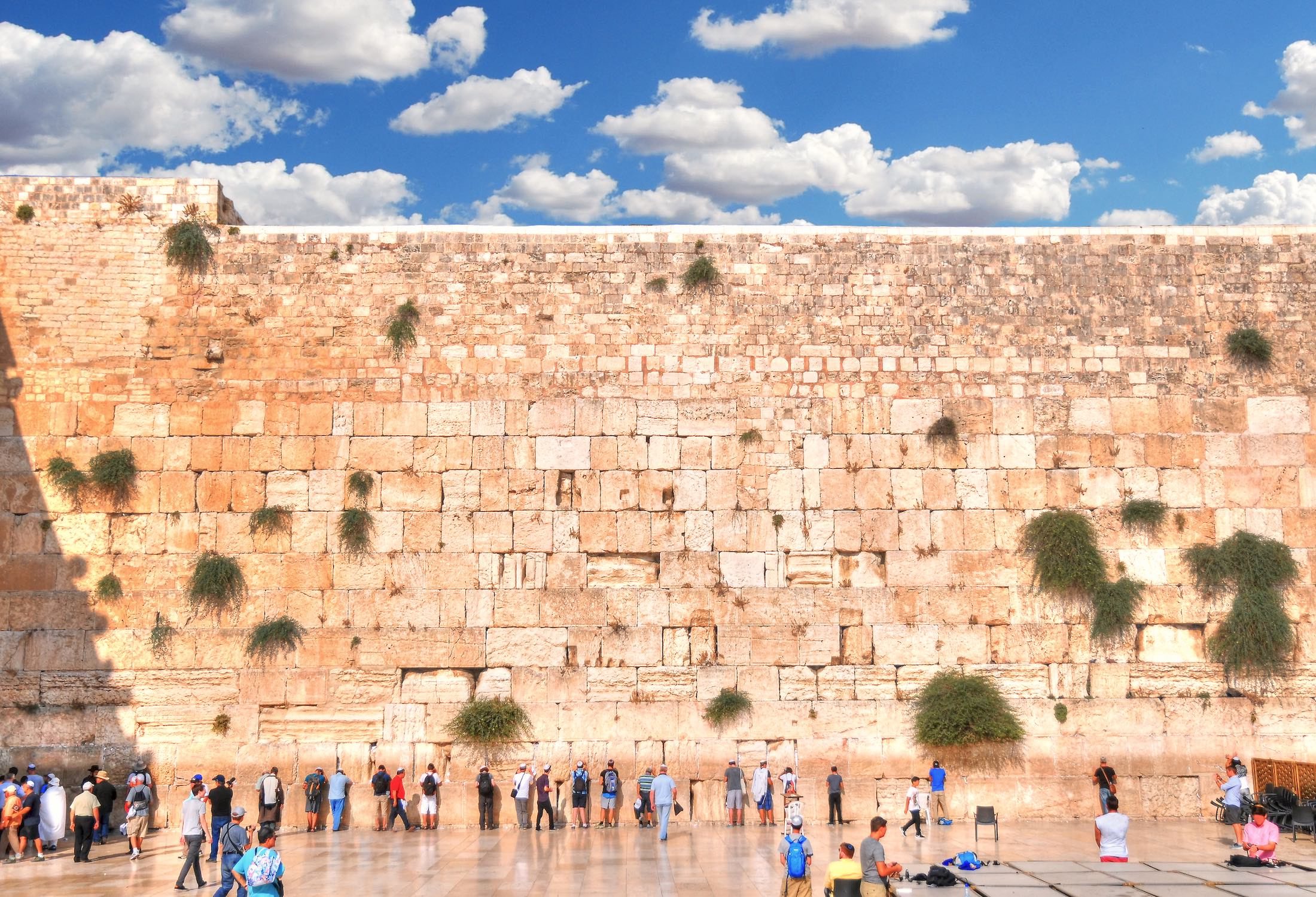
The First Time I Stood at the Kotel Alone
There is a difference between arriving at the Kotel with a group and walking toward it alone.
With a group, there is usually movement.
Someone is explaining the history. Someone is asking where to meet afterward. Someone wants a photo. Someone is reminding everyone how much time remains.
You are standing in one of the most spiritually significant places in the Jewish world, but part of your attention is still attached to the schedule.
Alone, there is nowhere else to be.
Walking Toward the Wall
Jerusalem has a way of making history feel present.
The stones are not presented behind glass. People live beside them, pray against them, argue over them, and build their lives around them.
Walking through the Old City alone, I became increasingly aware that I was not simply visiting an ancient place.
I was walking through a story that somehow belonged to me.
That feeling is difficult to explain.
I did not build Jerusalem. I was not born there. I did not grow up speaking Hebrew. Much of its history remains beyond what I understand.
And yet, something in me recognized it.
What Do You Say to Hashem?
When I reached the Kotel, I placed my hand against the stone.
Then I had to decide what to say.
That may be the strangest part of prayer. We spend so much time imagining what we would say if we had a direct audience with Hashem, and then the moment arrives and language suddenly feels inadequate.
Do I ask for success?
Clarity?
Marriage?
Family?
Health?
Courage?
Do I thank Hashem?
Do I apologize?
Do I explain myself?
Hashem already knows what I want, what I fear, and what I have been avoiding. So what exactly is the purpose of saying it?
Standing there alone, I began to understand that prayer is not about giving Hashem information.
Prayer gives me somewhere to become honest.
The Things We Carry Quietly
There are hopes we speak about openly and hopes we barely admit to ourselves.
I want to build meaningful things. I want to live courageously. I want to help people. I want a strong relationship with Hashem. I want to build a warm Jewish home and, one day, a family grounded in Torah, kindness, curiosity, and adventure.
I also carry fear.
Fear that I will choose the wrong path.
Fear that my ambition will move faster than my wisdom.
Fear that I will build a life that looks successful but does not feel true.
At the Kotel, those hopes and fears did not disappear.
They simply felt safe enough to acknowledge.
A Place That Asks Something of You
People often describe Jerusalem as inspiring.
It is.
But Jerusalem can also be demanding.
It does not only ask what you believe. It asks how you intend to live.
It asks whether your values will remain ideas or become decisions.
It asks what kind of Jewish life you are actually prepared to build.
I did not leave the Kotel with a perfect plan.
There was no dramatic voice, sudden answer, or clear set of instructions.
What I felt was quieter.
I felt that I was allowed to take my own life seriously.
I felt that my relationship with Hashem could become something real.
And I felt that Jerusalem was no longer only somewhere I had visited.
It was becoming part of the person I was trying to become.
Standing Alone, But Not Alone
I had arrived by myself, but I did not feel alone.
I was surrounded by generations of Jews who had stood in that place carrying their own questions, grief, gratitude, and hope.
Their lives were different from mine, but the act of turning toward Hashem connected us.
That is what I carried away from the Kotel.
Not an answer.
A relationship.
Not certainty.
A willingness to keep returning.
Sometimes, the most meaningful prayer is not the one that solves your life.
It is the one that helps you stop hiding from it.